
In 2003 arbeitete ich für Radio Powerwell in Gelsenkirchen, die mit ihrer zweistündigen Sendung Backstage am Samstagabend über die lokale Musikszene berichtete – mit CD und Bandvorstellungen, Livemitschnitten diverser Konzerte und Interviews mit Musikern.
Dabei waren auch Top-Acts, die in der Gelsenkirchener Kaue auftraten. Und da das Studio von Radio Powerwelle im Keller der Kaue war, war es nur logisch, dass wir auch regelmäßig über die Künstler berichteten, die dort auftraten.
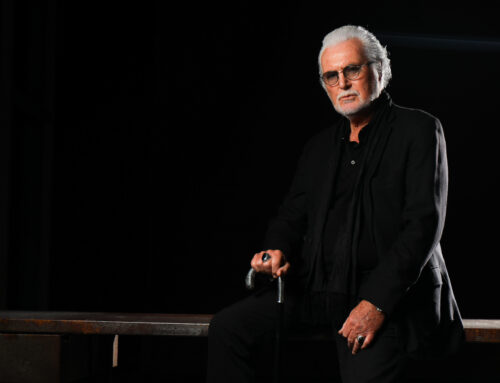
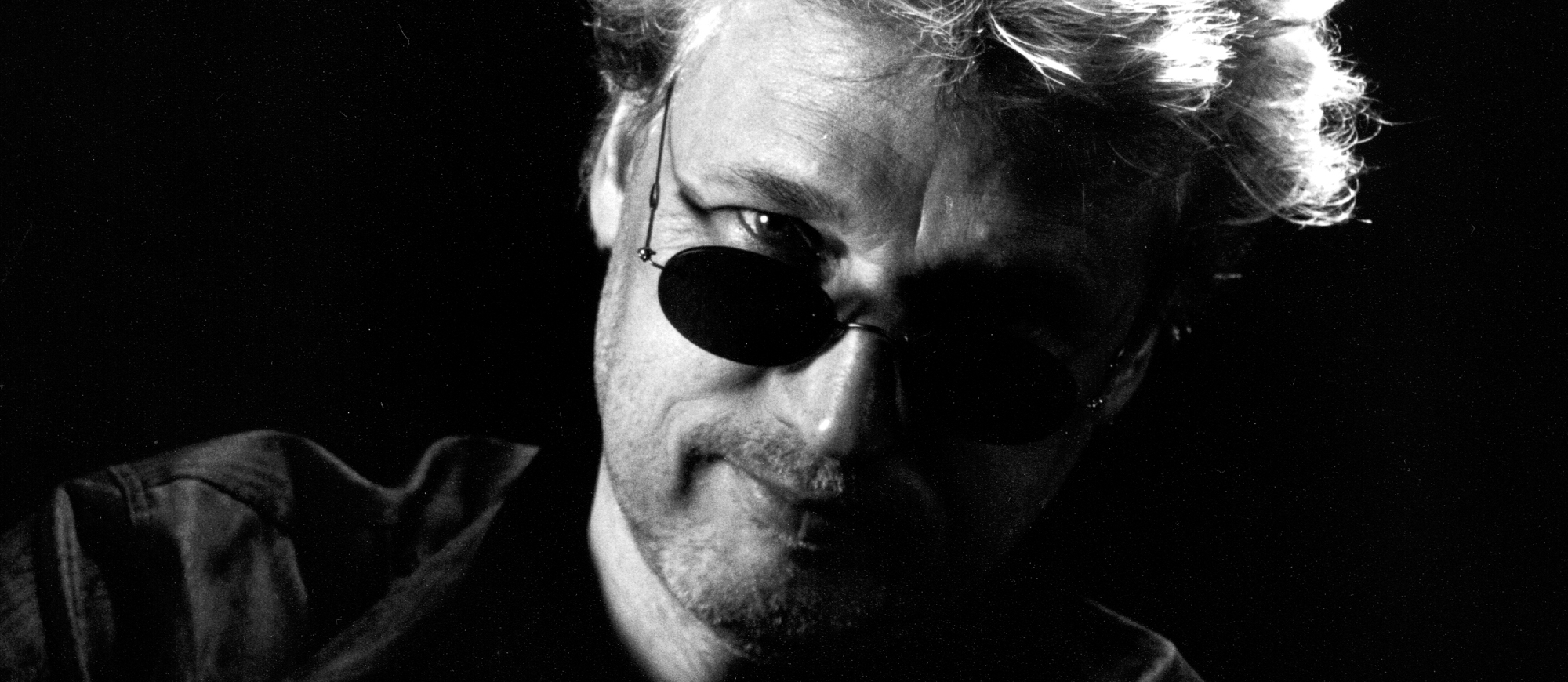
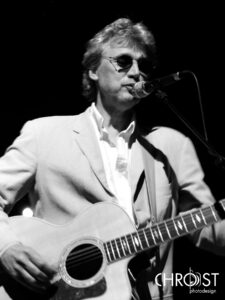
Drunter war auch David Knopfler, Mitbegründer der Dire Straits, der im Rahmen seiner Wishbones-Tour am 27. Mai 2003 in Gelsenkirchen halt machte. Als alter Dire Straits Fan war es für mich selbstverständlich ein Interview mit ihm zu führen. Das ganze dauerte knapp 20 Minuten und am Ende hatte ich noch zwei Minuten Zeit für ein Portrait, damals noch nicht digital, sondern mit Film. Das Bild gefiel ihm so gut, dass es viele Jahre auf seiner Homepage zu sehen war.
Hier ist nun die Transkription des Interviews, aus dem ich anschließend eine einstündige Sendung schnitt.
David Knopfler, it´s a pleasure for me to have you here in our studio
Nice to be here.
You were born in 1952 in Glasgow, but grew up in Newcastle-upon-Tyne. When did you start playing instruments?
From about the age of eleven I started playing guitar and piano and harmonica. My drum kit was the first thing I had, actually.
I heard that you had a drum kit in your bedroom?
I had a drum kit in the shed and I had a piano in my bedroom and I had a guitar that I just always played.
What did you prefer?
I liked everything. I mean, I liked piano and guitar best, I think. And I gave up the drums very quickly. I was a terrible drummer. I was a Ringo Starr of the drums, not a Billy Cobham.
Which were your musical influences then?
All kinds of stuff. Jimi Hendrix, Joni Mitchell, Van Morrison, Bob Dylan. All the classic singer-songwriter influences that you’d expect. And some of the slightly later guys as well, like Cat Stevens were also in the mix.
Were there any other influences? Maybe literature?
Literature, too. I mean, everything that helps you with writing. I got an idea for a song yesterday from a Runestone reading, which I was doing for the promoter. You’ve got this thing about mending your nets and that’s the name of the next song I’ve just written. So you pick up ideas everywhere.

Do you remember when you composed your first song?
Yes.
What was it about?
Well, the first serious song I wrote – if I had a guitar, I’d even play it to you – I was about 13 and I was playing it in a school folk club. And I pretended it was a traditional song because I didn’t know that people were allowed to write their own songs. So I said, this is a traditional Irish song. And it was about unrequited love. I think it was called Castles in the Sand… I was already using metaphor when I was a 13 years old in short trousers. So yeah, that’s when I started writing really. And the audience seemed to like it. So I thought, oh, I can do this. And I was enjoying doing it. But I didn’t admit to them being my songs because I thought if I said it was my song that some teacher would come over and say, you must leave now. This is not allowed to play your own songs.
Since your first solo album was released in 1983, you made eight albums so far. And so you’re part of the music business, but it seems like you don’t like it at all.
The music business?
Yes.
Well, ask any artist whether they like the music business. No artist likes the music business. Because it’s business. And art is art. And business is business. It’s like mixing oil and water.
You wrote a book about it.
Oh, I was having a bit of fun, yeah. „Bluff Your Way in the Rock Music Business (The Bluffer’s Guides)“, is a little bit out of date now. It was written about 10, 12 years ago. Some of the references are no longer really true. It’s changed a lot in the last 10 years. But no, I accept it. I understand it. I do a contract with a record company, and I try and do my best for them. But this is not what moves me. What really moves me is when I go into a studio. For me, it’s still like going into a church. I love it. I want to light a candle in gratitude for being allowed to be in a studio. Being in a real studio with a real desk and an engineer and the guys, oh, I’m in heaven.
Now let’s talk about your latest CD. Why did you call it Wishbones?
It was a suggestion of a friend of mine, Anne-Marie, in America, who was visiting us. And she brought these things called soul cards with her and she did a reading for me. And one of the cards looked like a wishbone – a wishbone is on a chicken. And when you snap it, you can make a wish – And she said, I think this album should be called Wishbones. And I said, I think you’re right. So that might have been why.
How long did you need to record it?
Not so long, really. The basic, the bulk of the record was recorded in about five, six weeks. But then I took it to the record company. And then we added strings. And we brought in some kind of expensive post-production work. And we recorded three or four more songs, which took quite a long time. So maybe three months, actually. It took longer than it should have. But normally, I’ll make a record in six weeks.
When you write a song, what is first, the lyric or the music?
Almost always the lyrics. But not always. If there’s a really strong tune, and it’s insisting on being, and it’s insisting on finding its way to the front of my head, then the music will come first. But usually I sit and I write lyrics. And then I go to the piano or to the guitar. And then I change the lyric that I’ve written. I mean, the lyric is not, the first set of lyrics isn’t what winds up on the record. But that’s usually my starting point. And then I will change it, strip it, take bits out, adjust it, throw bits away, bring other bits in. But it’s first one, then the other. First the music, then the lyric, then the music, then the lyric, then back to the music. And things adjust and change. I have to be quite careful, because otherwise Harry [Bogdanovs], my guitarist, complains that I write too many ballads. And if I’m not careful, I will do 15 ballads, because they’re easy to write.
On Wishbones, you mention a lot of religious things, like St. Swithin’s, Jericho or the song, „If God Could Make the Angels“. So, are you a religious man and do you believe in God?
I wouldn’t say religious. Religious is the wrong word, because I don’t belong to any religious group. And I wasn’t christened as a child or anything. And my father was Jewish, and he was a communist, so he wasn’t Jewish from a religious sense. I’m spiritual. I think that is perhaps the word to say. I think there’s something more going on out there than just working 9 to 5 and dying. So yes, I’d say that there’s something else out there, and there are other things to believe in. And I like the imagery, whether it’s Christian, Islam, Buddhist, or whatever it is. I like the imagery of religions, because they’re part of the ideology of humanity. They’re part of the history of what we all are and where we’ve all come from.
In that song, Jericho, you sing about the Battle of Jericho. Why did you use an Irish flute in it?
Well, because it was a Celtic-influenced tune. I mean, it sounded Celtic to me, the tune. And I was working with Irish musicians. And also because the song was really just a bit of nonsense. It was a bit of fun. I mean, in that song, if you look at the lyrics, you’ll find I’ve mentioned every album that I ever released: „Behind the lines“, „Cut the Wire“, „Lips Against the Steel“. All those album titles are in the lyric. So I wrote that song slightly… The song was really just a metaphor for songwriting and for where I’ve come from and where I’m going to.
You also wrote a song about Carla Faye Tucker, who was the first woman who got the death penalty in Texas. Do you want to criticise the death penalty in general or George W. Bush, who was a governor…
LAUGHTER
…who could have stopped her death penalty?
Great question. George, of course. She wasn’t the first person to get the death penalty…
But in Texas?
No, she wasn’t, but she was famous because it was a very controversial execution. I mean, there were lots of grounds for thinking that it was an inappropriate thing to do. And her husband, who was a priest, said about George, he’s killing for votes, which I think was pretty much what he was doing. I think it was an absolute fucking disgrace what George Bush did there. And I think he is a complete fucking disgrace as a president and as a human being.
In the song „The Bones“, there is an emperor saying, „Alles klar, kein Problem now“. Why did you use the German language in this case?
That’s another of my old tricks. There’s always a line in all my albums. Almost all my albums have one line in German. It’s just a tradition. But it was also because he went to Switzerland, and why not? I mean, it could have been French, it could have been Italian, or it could have been German. I mean, I wanted to reference back to the fact that the guy had gone to Switzerland and was dealing with offshore money. It was a money laundering operation. It was a guy who wasn’t declaring his money and was sticking it offshore. So it was kind of like the idea of the phone call coming from overseas, you know, so he was speaking in a foreign language.
It is obvious that you are thinking a lot about problems in the world. Do you hope that your songs can help to make the world getting better one day, that people start to think about things going wrong?
It’s not the way I deal with it. I mean, you don’t choose to be a songwriter or choose to be an artist. You just are. It’s like an affliction. It’s like you don’t… Like being in love is a disease. It’s not something you… You don’t think, oh, I’m going to fall in love. I mean, you just do. And the same thing happens with the art. It’s a compulsion to create it. And the reasons that you create it aren’t really to do with anything except the inner compulsion to do it. So I don’t sit down thinking, I’m going to make the world a better place by writing a song. I mean, it doesn’t work like that. But maybe people start to think about… It may happen… I wouldn’t say it may happen. What I should really say is this. I’m really happy if just one person hears a song and they can emotionally connect with it. Just the same way if someone goes into a gallery and they see a painting they like and it works on some level for them. What they bring to the story, what they bring to the art, what they bring to the song is the critical thing. If they bring their own life experience to that song and if they can identify themselves in that song, then the song works for them. Then I’m happy. That’s what I want. I don’t want them to write to me and say, what exactly were you doing the day you wrote the song? Were you on that mountain? Were you the guy that had this thing happen? It’s not important. To me what’s important is that for the person who hears the work, it’s an authentic experience for them. It won’t be the same experience I had and it doesn’t matter. And I know I won’t reach many this way. That’s not what it’s about. Art is not about reaching millions of people. It’s about quiet reflection and it’s only a small percentage of the population who are going to give a shit.
You dedicated the album to the memory of Little Dancing Bear. Who is that?
He was a friend of mine in Australia. I never met him. We became email pals and emailed for years. He was a professor in Australia on the environment. Very left-wing. Very angry about the world. He used to write, send me articles about, look what they’re fucking doing now. He was a very, very nice guy and a professor of environmental studies and health. Environmental health, which involved third-world issues and things like that. And he was dying as I was making the record and I didn’t think it was going to get finished in time for him to hear it. So I dedicated it to him and sent him an early released copy of it before the artwork was done as a kind of thank you really. And I don’t know. You feel helpless in the face of that kind of thing when someone’s dying of cancer and there’s nothing you can do. It didn’t seem like very much to do but it was all I could do. Especially halfway across the world.
Now let’s talk a little bit about your tour. I read on the internet that you prefer being in a studio and that you don’t like being on tour.
That’s not true. This is an old Dire Straits myth that I think got perpetrated when I left Dire Straits. Rather than saying he left Dire Straits because he found working with his brother a pain in the ass, they said he left Dire Straits because he didn’t like touring because politically it was more expedient for them to say this. I don’t have a problem with touring. I like touring. I don’t like it as much as being in the studio. But I’d far rather tour than stack shelves or drive a taxi. I mean it’s a fantastic job. It’s a wonderful job. I’m having a ball.
Who are the musicians in your band?
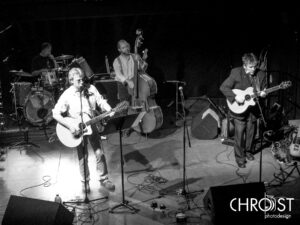
I have Martin Ditcham on drums who’s Chris Rea’s drummer and millions of other people. Martin’s been on a thousand albums. Nobody Martin hasn’t worked with. He’s one of Britain’s top four drummers I expect. And he’s fantastic. And he’s very quiet and unassuming and just thoroughly enjoying himself. And his friend Pete, Pete Shaw. Pete and Martin go back decades. They’ve been friends for years. So Pete’s on bass. So they make a nice team because they know each other really well. And Pete and Harry are good mates too. So Harry Bogdanovs on guitar. Only guitar. And me on rhythm guitar and piano. So it’s a little four-piece. And we work very well together. It suits me. It’s a kind of semi-plugged. It’s not completely unplugged and it’s not completely plugged. It’s a sort of acoustic laid-back approach. And it suits my work very well. The last three albums have all really been that kind of music.
What will you do after the tour when you come back home?
Look at all these things I need doing. I’ll be given a list of duties to do and be put back in my box again. Put in my place. So I don’t come back like a rock star. It should be very good for me.
Now the last question. If you couldn’t be a musician, what would you be?
I’d like to have been a film director. That’s the only other job that I really enjoyed. I loved making my own videos. I got a lot of pleasure from that when I was making videos over the years. The days when you could afford to make them. When record companies had budgets, they would give you 50,000 pounds and say go make a video. So you could get film and crew and choose a location and write scripts and have fun. That’s all gone now. You wouldn’t even get 5,000 pounds to make a video these days. I’m hopeless behind a camera. I need a great cinematographer. But I like directing and I think I can do it. I would have enjoyed having a career as a director maybe. Or perhaps as a poet or a writer. I’m a lousy painter really. I can’t take a photograph. I don’t think I’d be able to… I was a social worker. I might have stayed in social work.
I saw on your homepage that you were doing digital artwork.
Yeah, some web design. I did it for a few years before the technology got complicated. You only really had to learn the basics. Now there are programs that you have to spend two years at college fucking studying before you can even use them. It’s turned it into business. It’s not art anymore. It’s business. And you know how I feel about that.
Mr. Knopfler, thank you very much for taking the time. It’s been a great pleasure.
Thanks for interviewing me. Danke schön.